
Our firmware engineers focus on the intelligence that drives electronic products. Embedded software development begins with understanding requirements and defining a robust architecture that aligns with the product’s goals and hardware design. At outerspace, firmware engineering brings hardware to life enabling sensing, control, and communication through efficient, reliable, and secure embedded code.
We define your product through clear embedded architecture and software specification. Our team designs and develops the firmware that powers your hardware-bridging electronics, connectivity, and control. From low-level drivers and real-time systems to high-level application logic, we build robust, scalable code tailored to your hardware platform. Using industry-standard toolchains and iterative development, we rapidly prototype, test, and refine embedded software to meet performance, reliability, and regulatory goals. Through continuous integration and thorough verification, we ensure your firmware is production-ready and seamlessly integrated with your overall product design.
View work examples of our firmware or embedded software projects.

A developer of interactive fitness equipment with integrated gaming software, needed to develop a new combination spin and exercise bike for the boutique gymnasium and home gym markets.
They wanted to develop a never-seen-before bike that had two distinct modes of operation – spin and exercise bike mode to be housed in one hardware system, operated by a touch screen and supported by their software.
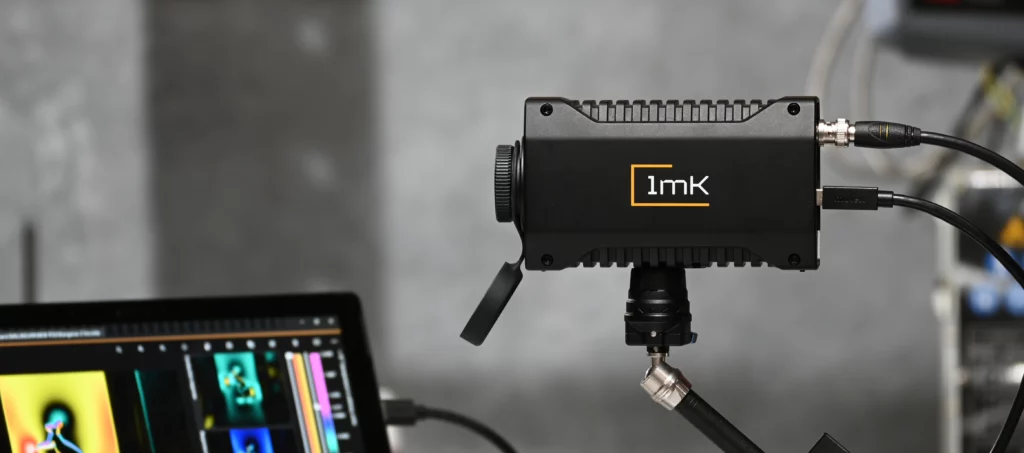
Outerspace’s multidisciplinary team worked with the managing director of LRM Technologies and researchers at DST Group, to design the 1mK thermal camera that quantifies the stresses that cause metal fatigue in aircraft. LRM, a distributor of lasers and thermal imaging cameras, own the licence to apply Defence Science and Technology group software to a thermal camera product idea. LRM’s managing director had a very clear idea about what the DST Group technology could achieve and needed a clear product roadmap to a successful physical product outcome. Outerspace collaborated with LRM and DST Group to clearly identify and plan the product format and pathway needed to create this revolutionary thermal camera.

Light My Bricks approached Outerspace to help expand beyond their maker-focused lighting accessories for LEGO®, with a goal of creating a consumer-friendly product range. The challenge was to design a system that was simple, safe, and intuitive, while still allowing flexibility and integration into LEGO® sets.
Outerspace’s task was to reimagine the electronics, usability, and product architecture to deliver a new Night Mode range — one that could bring lighting effects to LEGO® creations without the complexity of traditional wiring.

Many communities in remote regions lack reliable access to clean drinking water, relying instead on unsafe or expensive systems. Water Source Australia set out to change this with Brolga, a remote-controlled micro water treatment plant designed to provide safe, continuous drinking water anywhere in the world.
Outerspace partnered with Water Source to take an early-stage prototype and transform it into a manufacturable product. Our role included developing the architecture, electronics, firmware, and mechanical systems, while working closely with Water Source’s software and water treatment experts. Together, we shaped a system capable of producing up to 30,000 litres of safe drinking water a day, suitable for installation in the toughest environments.
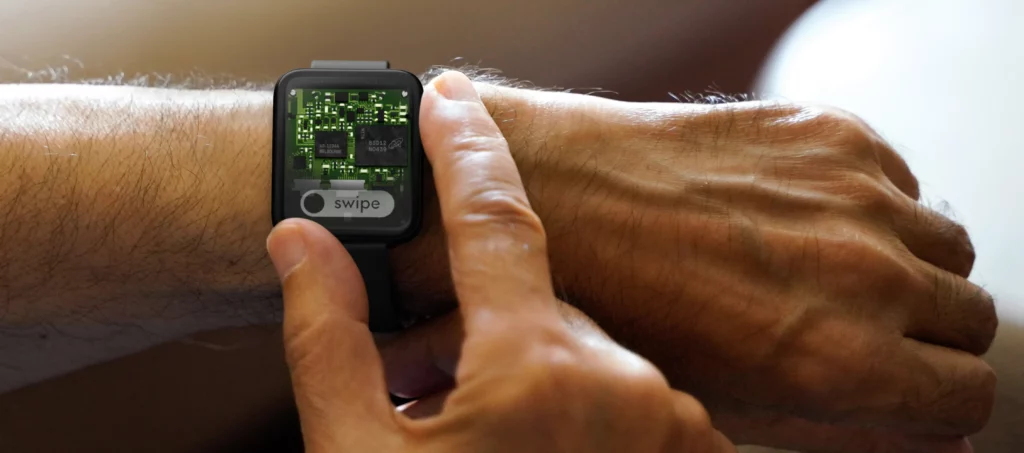
Global Kinetics set out to modernize their Personal KinetiGraph (PKG) smart watch — a device used to monitor Parkinson’s Disease tremors — to look and feel like an everyday wearable. The original version, essentially an accelerometer in a box, had evolved into a functional but clinical wrist-worn device. Global Kinetics needed a next-generation design that retained its powerful medical monitoring capabilities while removing the stigma of wearing an obvious medical device.
Outerspace partnered with Global Kinetics during the height of the COVID-19 pandemic, navigating supply shortages and remote working challenges. By combining our expertise in medical device development, electronics, and industrial design, we helped transform the PKG watch into a discreet, smart, patient-friendly product ready for clinical and research applications.

meet some of our team members


